

In the spice processing industry, the use of a Spices Steam Autoclave is crucial for maintaining the quality, safety, and shelf - life of various spices. One of the most frequently asked questions is: “What type of steam is used in a Spices Steam Autoclave?” As a reputable Spices Steam Autoclave supplier, we are here to provide you with in - depth knowledge on this topic.
Understanding the Basics of Steam in Autoclaves
Steam has long been a preferred medium for sterilization in autoclaves due to its unique properties. It can transfer a large amount of heat energy efficiently, which is essential for killing microorganisms such as bacteria, fungi, and viruses present in spices. There are mainly three types of steam used in industrial autoclaves: saturated steam, superheated steam, and wet steam.
Saturated Steam
Saturated steam is the most commonly used type of steam in Spices Steam Autoclaves. It is steam that is in equilibrium with the water at the same temperature and pressure. When water reaches its boiling point under a specific pressure, it starts to vaporize, and the resulting steam is saturated.
The key advantage of saturated steam in spice sterilization is its high latent heat. Latent heat is the energy required to change the phase of a substance without changing its temperature. When saturated steam comes into contact with the cooler spices, it condenses back into water, releasing a large amount of latent heat. This heat is then transferred to the spices, effectively raising their temperature and killing the microorganisms.
Moreover, saturated steam provides uniform heat distribution. Since the steam is in equilibrium with the water, it has a consistent temperature and pressure throughout the autoclave chamber. This ensures that all the spices inside the autoclave are sterilized evenly, preventing any hot or cold spots that could lead to incomplete sterilization.
For example, in a Steam Cashew Nut Sterilization Retort, saturated steam is used to penetrate the cashew nuts and eliminate any potential contaminants. The even heat transfer helps to maintain the integrity of the cashew nuts, preserving their flavor and nutritional value.
Superheated Steam
Superheated steam is steam that has been heated beyond its saturation point at a given pressure. It has a higher temperature than saturated steam at the same pressure. Superheated steam is less commonly used in Spices Steam Autoclaves, but it does have some unique applications.
One of the main advantages of superheated steam is its ability to dry the spices during the sterilization process. Since it is at a higher temperature, it can quickly evaporate any moisture present on the surface of the spices. This is particularly useful for spices that are prone to clumping or spoilage due to moisture.
However, superheated steam also has some drawbacks. It has a lower heat transfer coefficient compared to saturated steam. This means that it takes longer to transfer heat to the spices, which can result in longer sterilization times. Additionally, the high temperature of superheated steam can sometimes cause the spices to lose their flavor and aroma if not carefully controlled.
In some cases, a Static Steam Retort may use superheated steam for a short period at the end of the sterilization cycle to dry the spices. This helps to improve the shelf - life of the spices by reducing the moisture content.
Wet Steam
Wet steam is a mixture of steam and liquid water droplets. It is generally not recommended for use in Spices Steam Autoclaves because it can lead to inconsistent sterilization results. The presence of liquid water droplets means that the heat transfer is not as efficient as with pure steam.
The water droplets can also cause the spices to become wet, which can lead to clumping and the growth of mold and bacteria after the sterilization process. However, in some rare cases where a very gentle sterilization process is required, and the spices can tolerate a small amount of moisture, wet steam may be used with careful monitoring.
Factors Influencing the Choice of Steam Type
Several factors influence the choice of steam type in a Spices Steam Autoclave. These include the type of spices being sterilized, the required sterilization level, and the production efficiency.
Type of Spices
Different spices have different physical and chemical properties, which affect their response to steam sterilization. For example, delicate spices such as saffron or coriander may require a more gentle sterilization process to preserve their flavor and color. In such cases, saturated steam at a relatively low temperature and pressure may be the best choice.
On the other hand, hardier spices like peppercorns or cinnamon sticks can withstand higher temperatures and pressures. Superheated steam may be an option for these spices, especially if a drying step is required to improve their shelf - life.
Required Sterilization Level
The level of sterilization required depends on the intended use of the spices. For spices that are used in high - risk food products, such as baby food or ready - to - eat meals, a higher level of sterilization is necessary. Saturated steam is often the preferred choice in these cases because it can provide a more reliable and consistent sterilization result.
For spices that are used in less critical applications, such as home cooking or non - perishable food products, a lower level of sterilization may be acceptable. In such cases, the choice of steam type may be more flexible, and factors such as production cost and efficiency may play a more significant role.
Production Efficiency
Production efficiency is an important consideration in the spice processing industry. The time required for sterilization, the energy consumption, and the throughput of the autoclave all affect the overall production cost.
Saturated steam is generally more energy - efficient than superheated steam because it has a higher heat transfer coefficient. This means that it can transfer heat to the spices more quickly, reducing the sterilization time. Additionally, the equipment required to generate saturated steam is usually simpler and less expensive than that required for superheated steam.
Our Solutions as a Spices Steam Autoclave Supplier
As a leading Spices Steam Autoclave supplier, we offer a wide range of autoclave solutions tailored to the specific needs of the spice processing industry. Our autoclaves are designed to use saturated steam efficiently, providing reliable and consistent sterilization results.
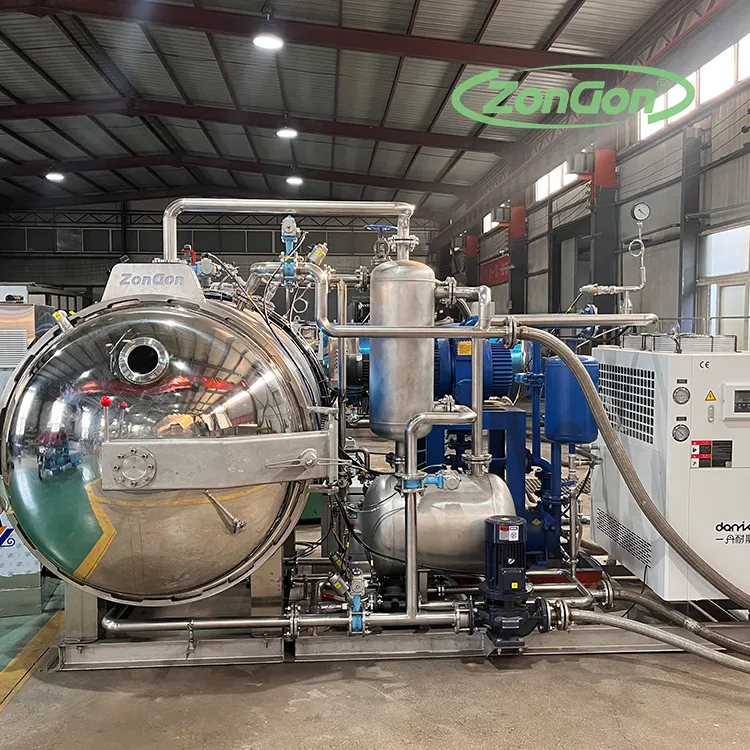

We also offer customization options to meet the unique requirements of our customers. For example, if you need to sterilize a particular type of spice that requires superheated steam or a combination of steam types, our engineering team can design and build a custom autoclave for you.
Our Steam Chili Powder Sterilizer is a prime example of our commitment to providing high - quality solutions. It is specifically designed to sterilize chili powder using saturated steam, ensuring that the powder retains its flavor, color, and nutritional value.
Contact Us for Your Spice Sterilization Needs
If you are in the spice processing industry and are looking for a reliable Spices Steam Autoclave supplier, we are here to help. Our team of experts can provide you with detailed information about our products, including the type of steam used, the sterilization process, and the technical specifications.
We understand that every customer has unique needs, and we are dedicated to providing customized solutions that meet your specific requirements. Whether you are a small - scale spice producer or a large - scale industrial manufacturer, we have the expertise and the equipment to help you achieve your goals.
Contact us today to start a discussion about your spice sterilization needs. We look forward to working with you to improve the quality and safety of your spice products.
References
- [1] “The Principles of Steam Sterilization in Food Processing,” Journal of Food Science and Technology.
- [2] “Steam Generation and Its Applications in Industrial Autoclaves,” Industrial Steam Technology Handbook.